How to choose
What a full size mattress measures, and what the name does not tell you
A full size mattress is a retail size name, not a regulated dimension. Here is which inches to read off the spec sheet, how width per sleeper compares, and which parts of a mattress label are set by federal rule.
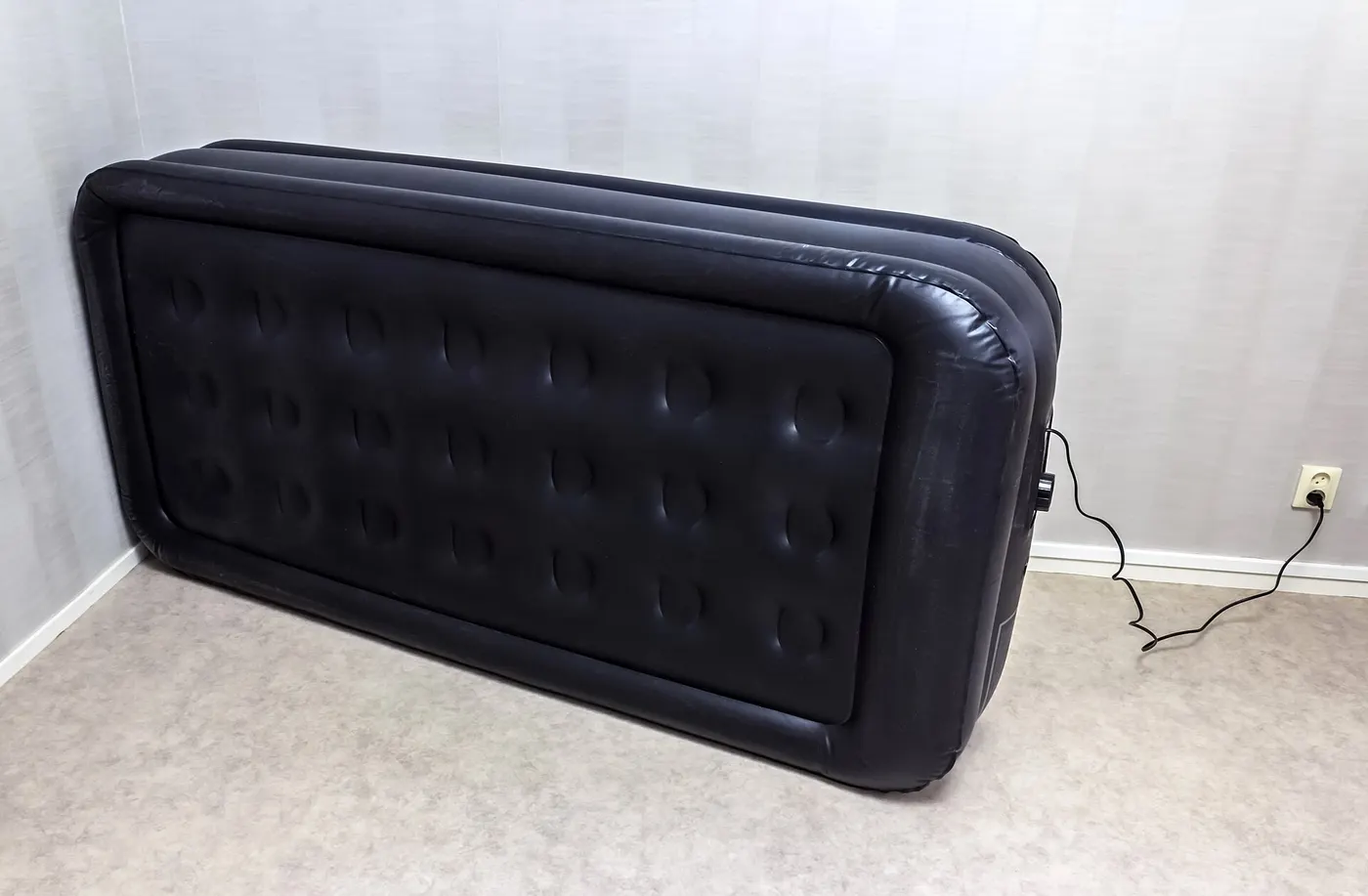
A full size mattress is one of the few products where the name on the shelf edge does not come from any standard. There is no federal rule that says what a full has to measure, which is why two mattresses both sold as full can differ by an inch in width and by rather more in height, and why a fitted sheet bought for one can sit loose on the other.
What follows is the set of figures worth reading before you commit: the length and width you will actually get, how that width divides between two sleepers, what the profile height does to your bedding and your base, and which parts of the label are genuinely regulated so you know what you are entitled to find there.
A full is a retail name before it is a measurement
Mattress size names in the United States are trade conventions that settled over decades of selling beds, and they have never been written into a federal dimensional standard. Nothing stops a maker from calling a slightly narrower slab a full, and nothing obliges a maker to publish the figure in the same place twice. That is not a scandal; it is simply the reason the size name cannot be the end of your checking.
In practice the convention is stable enough to plan around. A full is commonly listed at 54 inches wide by 75 inches long, which puts it a little wider than a twin and well short of a queen. The point of knowing the convention is to spot a departure from it. If a listing gives a width of 53 inches, or gives no figures at all, that is the listing to question rather than the one to trust, because fitted bedding and existing frames are built around the convention and not around the exception.
Confirm the number in writing before the order goes through. A screenshot of the specification block, with the date on it, is worth more than a sales conversation, and it is the thing you will want if the delivered item does not sit on the base you already own.
- Find the stated width and length in inches on the product page, not in a size chart that covers the whole range.
- Check whether the figure is described as nominal, and whether a tolerance is given.
- Check the profile height separately, because it is the figure most often left out.
- Save the page with the date, so you can compare what arrives against what was published.
Width is the figure that decides whether a full works for two
Width is where a full sits awkwardly, and the arithmetic is simple enough to do in your head. Divide the stated width by the number of people who will sleep on it and compare that against the width of a single bed, because a single bed is the width a sleeper is used to having. A full shared by two gives each person noticeably less lateral room than a twin would, which is why couples who try a full often describe the bed as fine for one and tight for two rather than as uncomfortable in itself.
That does not rule a full out. It makes a full a sensible choice for one adult who likes space, for a teenager who has outgrown a twin, or for a shared bed in a room that cannot take a queen. It makes a full a poor choice for two adults who both move in their sleep, and the table below is the fastest way to see why.
| Retail size name | Commonly listed width | Commonly listed length | Width per sleeper if shared by two |
|---|---|---|---|
| Twin | 38 inches | 75 inches | 19 inches |
| Twin XL | 38 inches | 80 inches | 19 inches |
| Full | 54 inches | 75 inches | 27 inches |
| Queen | 60 inches | 80 inches | 30 inches |
| King | 76 inches | 80 inches | 38 inches |
These are the conventions retailers generally publish, not figures fixed by any federal standard. Confirm the stated dimensions on the specification block of the item you are ordering.
Length rules people out faster than width does
A full and a twin share the same conventional length of 75 inches, and that is the figure that quietly ends the discussion for tall sleepers. Once a person's height plus the room taken by a pillow exceeds the mattress length, feet hang over the end, and no amount of width compensates. A queen and a twin XL both move to 80 inches, which is the reason a twin XL exists at all: it buys length without buying width.
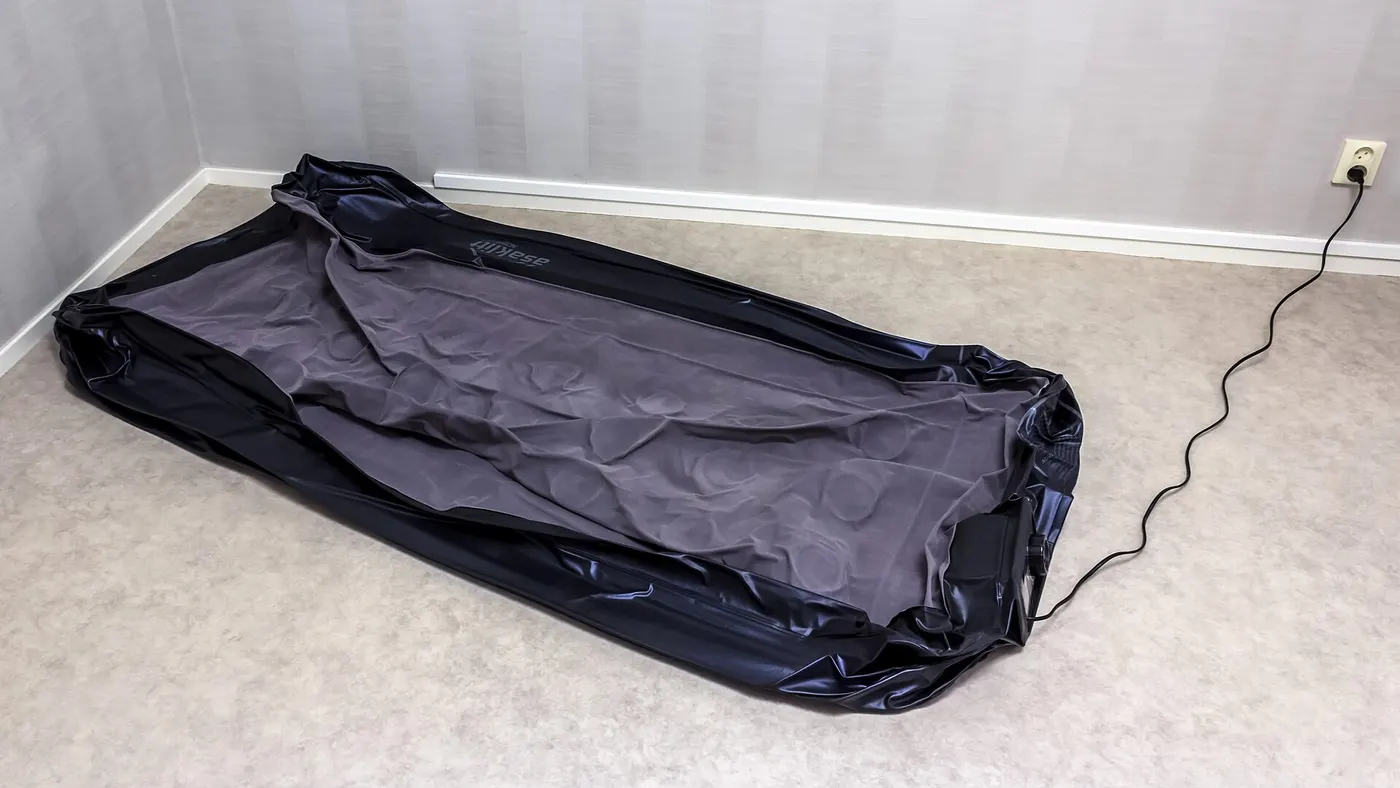
If anyone sleeping on the bed is close to 6 feet, measure them lying down rather than guessing from a stated height, and add room for the pillow. The same check applies to inflatable beds sold under the same size names, where the usable sleeping surface can be shorter than the outer dimension because the perimeter beading rises at the edge. For a guest bed this matters less than it does for a bed slept in every night, but it is the same measurement either way.
Profile height changes your sheets, your base and the step up
Profile is the third dimension and the one most often missing from a size chart. It decides whether your existing fitted sheets will reach, how high the sleeping surface sits once the mattress is on a base, and whether getting out of bed is a step down or a slide. Sheet packaging usually states a pocket depth, and the mattress profile has to fit inside that figure with a little slack for the corners.
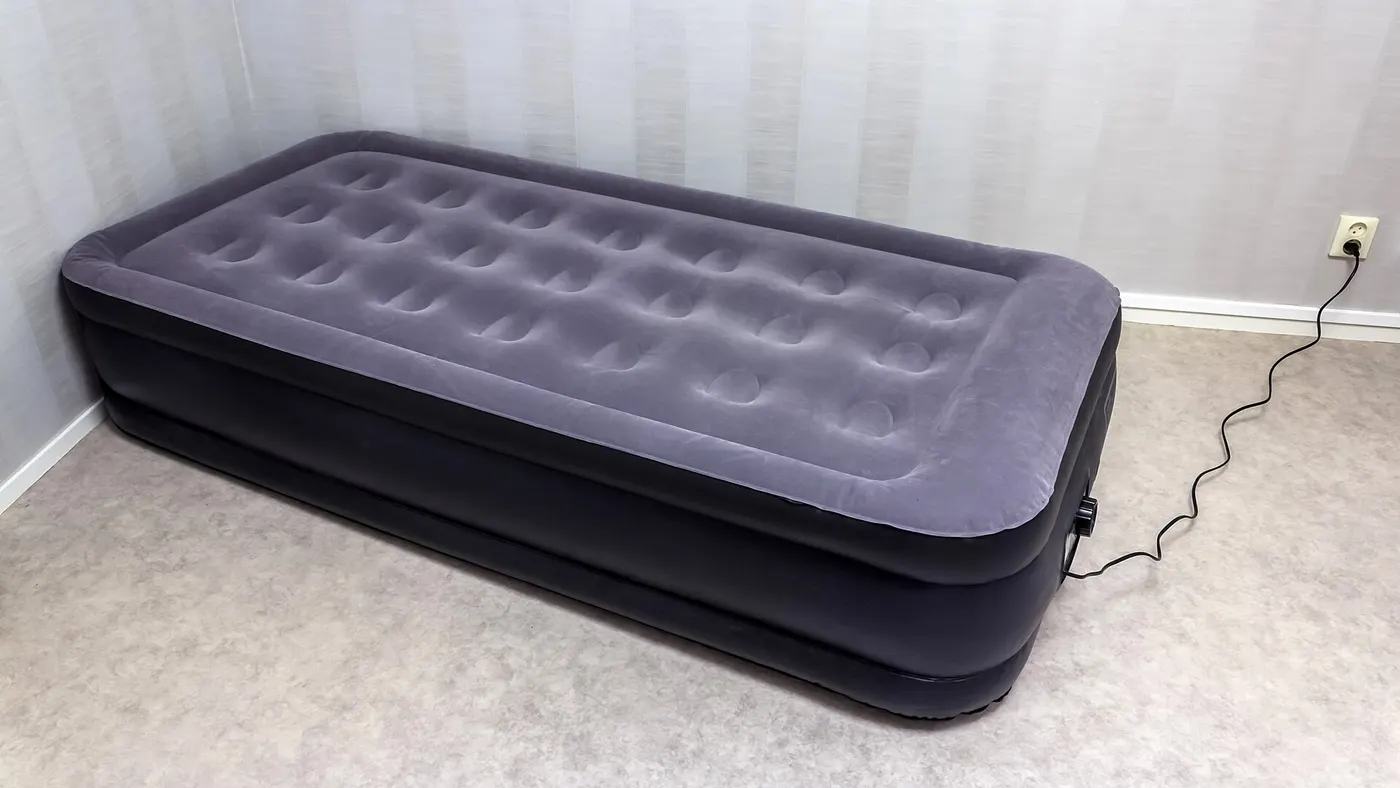
The same logic applies to temporary beds. A single-chamber air bed sits low, a double-height one sits at roughly the height of a conventional bed, and the practical difference between them is almost entirely about getting up rather than about comfort while asleep. If the bed is for a guest who finds low furniture difficult, profile height is the specification to read first.
- Read the mattress profile in inches and compare it against the pocket depth printed on your sheet packaging.
- Add the base or platform height to the mattress profile to get the real surface height.
- Allow slack at the corners rather than matching the two figures exactly.
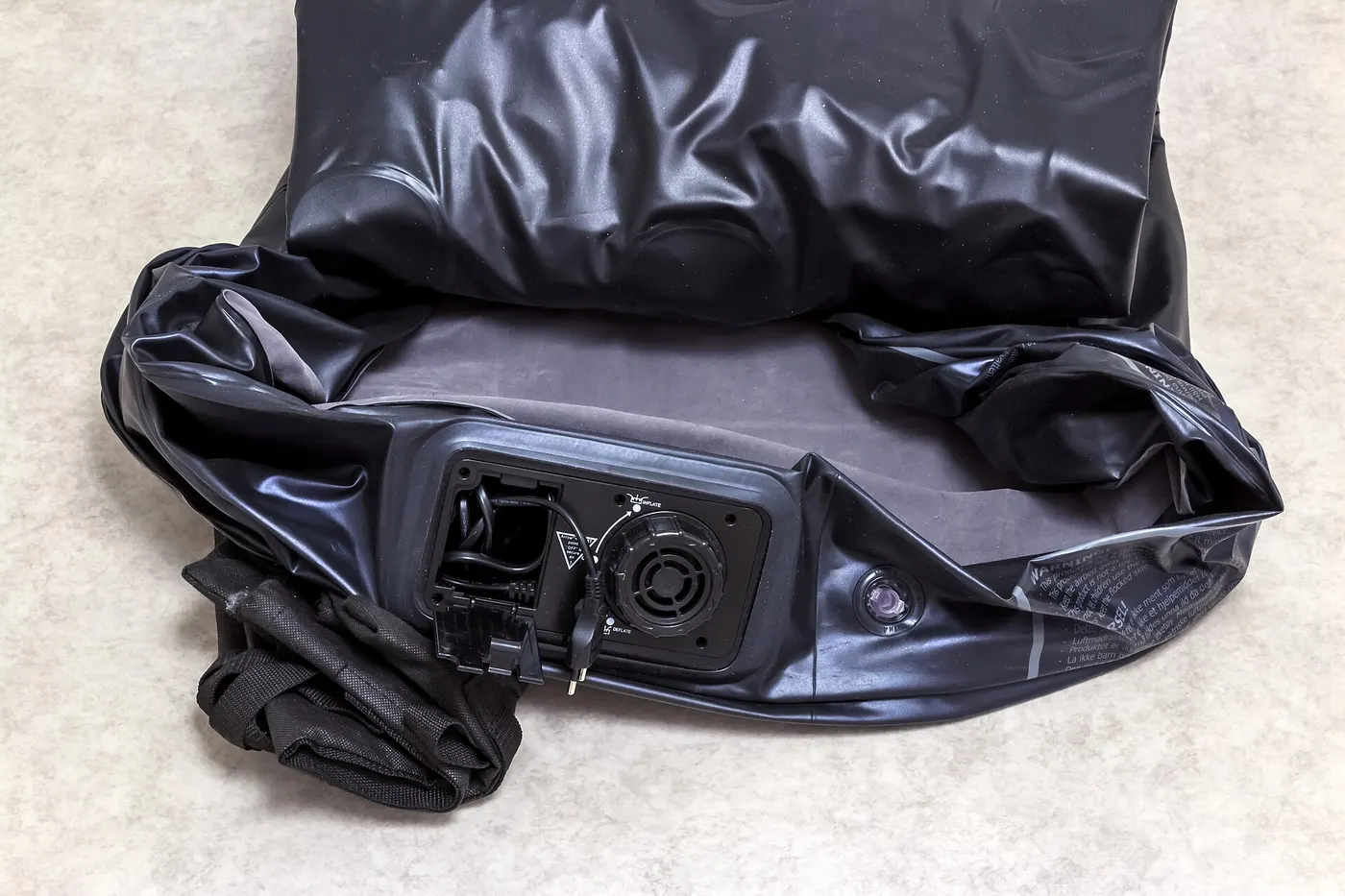
- Check the stated height of an inflatable bed when fully inflated, not when packed.
The regulated numbers on a mattress are about ignition and fibre, not size
It is worth knowing which figures on a mattress actually come from federal rules, because those are the ones a seller cannot restate to suit a listing. Two of them concern ignition resistance. Under 16 CFR part 1632, the cigarette ignition test counts a location as passing when the char length is not more than 2 inches, which the rule also states as 5.1 cm, measured in any direction from the nearest point of the cigarette. Under 16 CFR part 1633, the open flame test records heat release for the duration of the test, and the criteria are that the peak rate of heat release shall not exceed 200 kW at any time within the 30 minute test and that total heat release shall not exceed 15 MJ for the first 10 minutes.
The third set concerns the label rather than the fire. The textile fibre labelling rules at 16 CFR part 303 require constituent fibres to be disclosed, and section 303.3 says that no fibre present in an amount of less than 5 percent of total fibre weight may be named by its generic name or trademark, which is why you see the phrase other fiber on so many labels. The same part draws a line that surprises people: its definition of beddings covers sheets, covers, blankets, comforters, pillows, pillowcases, quilts, bedspreads and pads, and expressly excludes furniture, mattresses and box springs, which are treated instead as upholstered products.
The practical reading of all this is narrow but useful. A mattress law tag and fibre label tell you about ignition resistance and material content. Neither tells you the size, neither tells you the firmness, and neither is a substitute for the dimensions on the specification block.
| Rule | What it governs | Figure stated in the rule |
|---|---|---|
| 16 CFR part 1632 | Cigarette ignition resistance of mattresses and mattress pads | Char length not more than 2 inches (5.1 cm) |
| 16 CFR part 1633 | Open flame resistance of mattress sets | Peak heat release not above 200 kW within the 30 minute test; not above 15 MJ in the first 10 minutes |
| 16 CFR part 303 | Fibre content disclosure on textile products | Fibres below 5 percent of total fibre weight must be shown as other fiber |
None of these rules sets a mattress dimension. Size always has to come from the maker's published specification.
What to settle before the order, and when to read these sources again
Work through the measurements in the order that eliminates options fastest. Length first, because it is the one no adjustment fixes. Width second, divided by the number of sleepers. Profile third, checked against both your sheets and your base. Only then does firmness or construction become worth arguing about, because a mattress that does not fit the frame or the room is not improved by being the right feel.
Keep a written note of the figures you were shown and the date you were shown them. Specifications get revised between production runs, listings get edited, and the version you measured against is the one you will need to point at if something arrives at a different size than you planned for.
- Measure the tallest sleeper lying down and add room for a pillow before choosing a length.
- Divide the stated width by the number of sleepers and compare that against 38 inches.
- Check the profile height against the pocket depth printed on your sheets.
- Measure the inside of your existing frame rather than trusting its size name.
- Photograph the specification block and the date before ordering.
Before you buy
- Measure the tallest sleeper lying down, then add room for a pillow, before fixing on a length
- Read the stated width and length in inches from the specification block, not from a general size chart
- Divide the stated width by the number of sleepers and compare the result against 38 inches
- Check the mattress profile against the pocket depth printed on your sheet packaging
- Add base height to mattress profile to work out the real sleeping surface height
- Measure the inside of the frame you already own rather than trusting its size name
- Confirm the law tag and fibre label are present and legible on arrival
- Photograph the specification block with the date before the order is placed
Questions readers ask
- Is there a legal definition of a full size mattress?
- No. Federal mattress rules cover ignition resistance and labelling, not dimensions. The width and length attached to the name full are retail conventions, so the figure that matters is the one on the maker's specification block for the item you are ordering.
- Can two adults sleep on a full?
- They can, but each person gets less lateral room than a single bed gives one person. Divide the stated width by two and compare it against the conventional twin width of 38 inches. If both sleepers move a lot at night, the shortfall is the thing they will notice.
- Will my old fitted sheets fit a new full mattress?
- Only if the profile height falls inside the pocket depth printed on the sheet packaging. Width and length can match perfectly while a thicker mattress pulls the corners off, which is why profile should be checked as a separate figure rather than assumed from the size name.
- What does the law tag on a mattress actually tell me?
- It relates to ignition resistance and material content rather than to size or comfort. The cigarette ignition criterion in 16 CFR part 1632 is a char length of not more than 2 inches, and the open flame criteria in part 1633 are 200 kW peak heat release within the 30 minute test and 15 MJ in the first 10 minutes.
- Do inflatable beds use the same sizes?
- They borrow the same names, but the usable sleeping surface can be smaller than the outer dimension because the raised perimeter takes up part of the width and length. Read the stated inflated dimensions and the inflated height rather than assuming they match a conventional mattress of the same name.
Sources
- 16 CFR part 1632, Standard for the Flammability of Mattresses and Mattress Pads (Code of Federal Regulations, GovInfo) — checked 2026-11-06
- 16 CFR part 1633, Standard for the Flammability (Open Flame) of Mattress Sets (Code of Federal Regulations, GovInfo) — checked 2026-11-06
- 16 CFR part 303, Rules and Regulations under the Textile Fiber Products Identification Act (Code of Federal Regulations, GovInfo) — checked 2026-11-06
Some links on this site can earn us a commission. That does not change which product a guide recommends, and it adds nothing to your price. Advertising is not enabled on this site yet. When it is, ads will be labelled and kept visually separate from the guides.